The tVNS® E is currently the only transcutaneous, non-invasive vagus nerve stimulation device approved in Europe under the new Medical Device Regulation (MDR EU 2017/745).
The tVNS® E is explicitly approved for the indications of epilepsy, chronic migraine, depression, and Prader-Willi syndrome.
Reduction in seizure frequency during tVNS compared with the pre-intervention phase by at least 25%, after a treatment period of 20 weeks.
(Bauer et al. 2016: https://doi.org/10.1016/j.brs.2015.11.003)
Reduction in the depression-specific HAMD score by at least 2–3 points in adult patients when used concurrently with psychopharmacological and psychotherapeutic treatments, after a treatment period of 9 weeks.
(Melis et al. 2020: Dnb-32_S-1_SVE.pdf; Evensen et al. 2022: https://doi.org/10.1111/ner.13366)
Reduction in the frequency of migraine days by 50% after a treatment period of 12
weeks.
(Straube et al. 2015: https://doi.org/10.1186/s10194-015-0543-3)
Reduction in the average number of temper outbursts per day compared with the average number of outbursts per day in a pre-intervention phase by at least 50%, after a treatment period of 12 months.
(Manning et al. 2019: https://doi.org/10.1371/journal.pone.0223750)
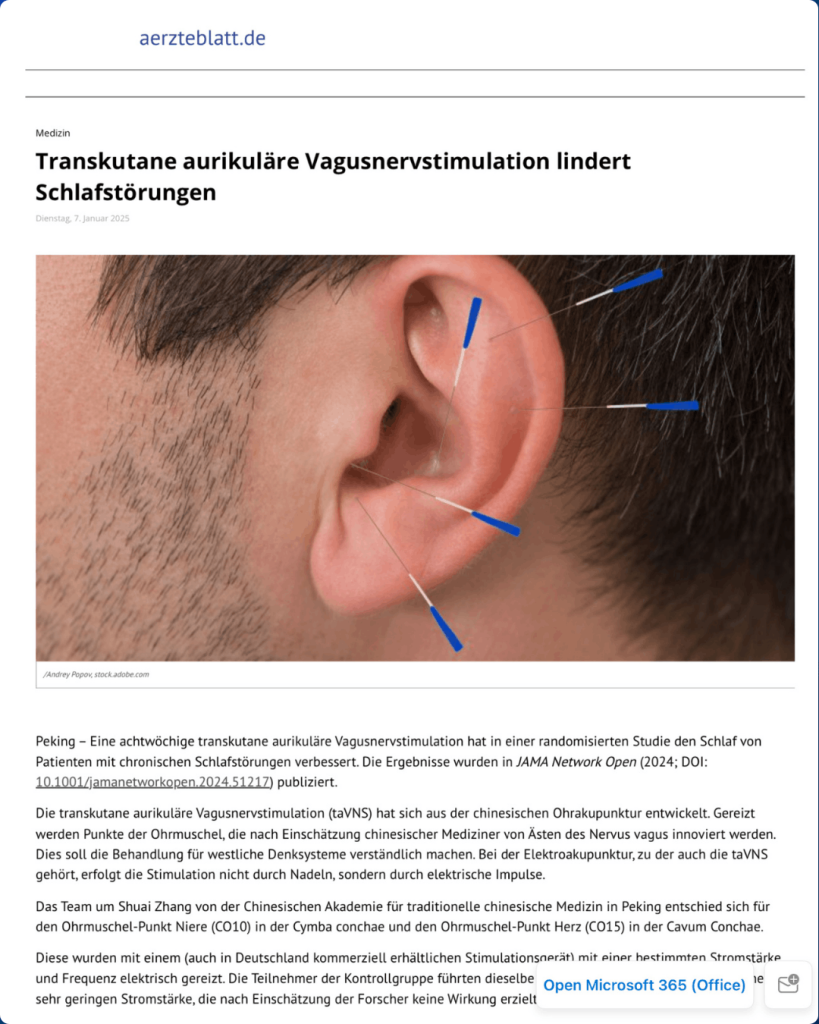
Our tVNS® device stimulates at the most effective location for transcutaneous auricular vagus nerve stimulation – at the cymba conchae. In this area, 100% of the nerve fibers beneath the skin are vagus nerve fibers. Other areas, such as the tragus, are traversed by vagus nerve fibers in only 45%.
(Yakunina et al. 2016: https://doi.org/10.1111/ner.12541)
tVNS® is a low-side-effect procedure. Thousands of patients worldwide have already used tVNS®. Based on customer feedback and studies conducted with our devices, tVNS® is continuously improved – always with the goal of optimizing it even further. In a large 2022 meta-analysis by Kim and colleagues, 177 studies with 6,322 participants were evaluated. There was no statistically significant difference in the risk of adverse events between active tVNS and the control condition. The most common side effects were ear pain, headache, and tingling — all mild and temporary.
(Kim et al. 2022: https://doi.org/10.1038/s41598-022-25864-1)
tVNS® does not stimulate continuously, but rather in a pattern. Each 28-second active stimulation phase is always followed by a 32-second pause. The brain responds quite differently to rhythmic activation than to continuous current. The 28/32-second pattern leverages three central effects: avoidance of habituation, optimal activation of central brainstem nuclei, and promotion of neuroplasticity at a high level of safety. Furthermore, this pattern has proven more tolerable, thereby minimizing side effects even further.
(Giraudier et al. 2025: https://doi.org/10.3389/fnhum.2025.1539416)
The ear electrodes of our tVNS® device are made of titanium-iridium. This material was chosen because it is highly biocompatible and corrosion-resistant, has stable electrical conductivity, and has proven itself for decades in medical technology (e.g., cardiac pacemakers, neurostimulators). Our titanium-iridium electrodes ensure that the electrical stimulation is delivered evenly and in a controlled manner, that skin irritation is minimized, and that the electrode can be used for as long as possible.
We do not want to leave you alone with the use of our tVNS®
devices. That is why we guarantee smooth delivery to your home and support throughout the use of our tVNS® devices. If you have any questions, you are always welcome to contact us.
We develop and manufacture our tVNS® devices entirely in Germany. Our headquarters are located in Erlangen, in the heart of the Medical Valley in the Nuremberg Metropolitan Region. Through collaborations with scientific and medical partners worldwide, we strive to continuously develop our tVNS® devices – true to our vision “Shaping the Future of Non-Invasive Healing.”
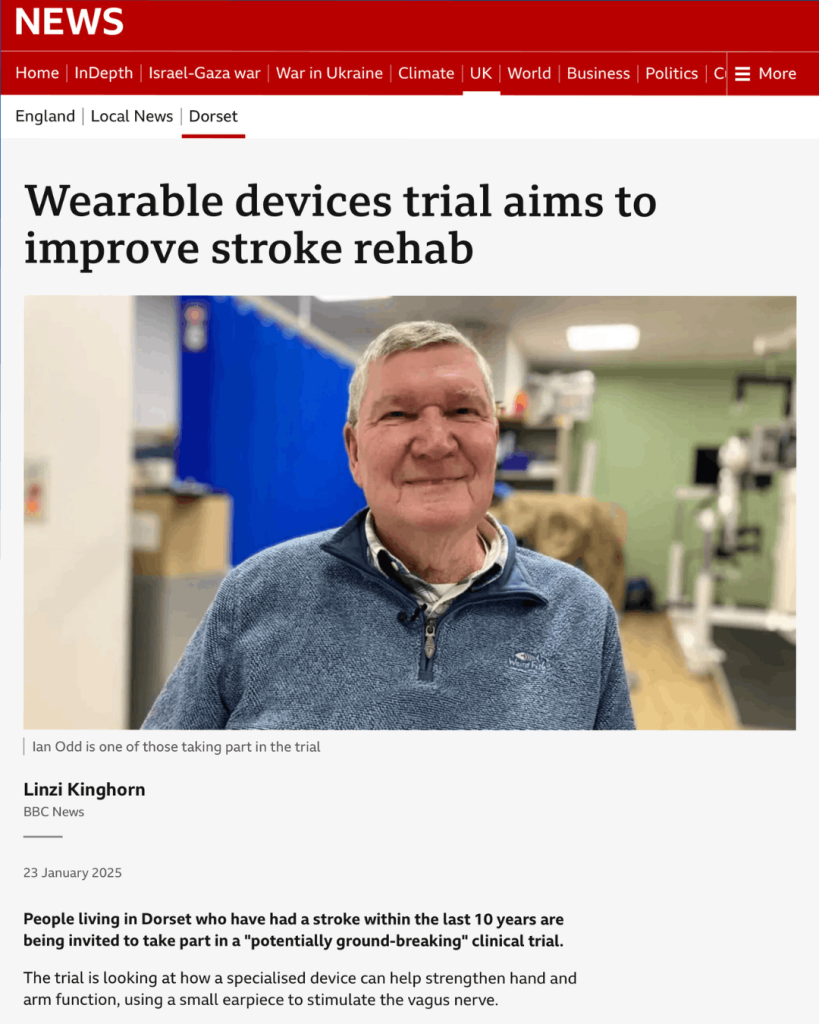
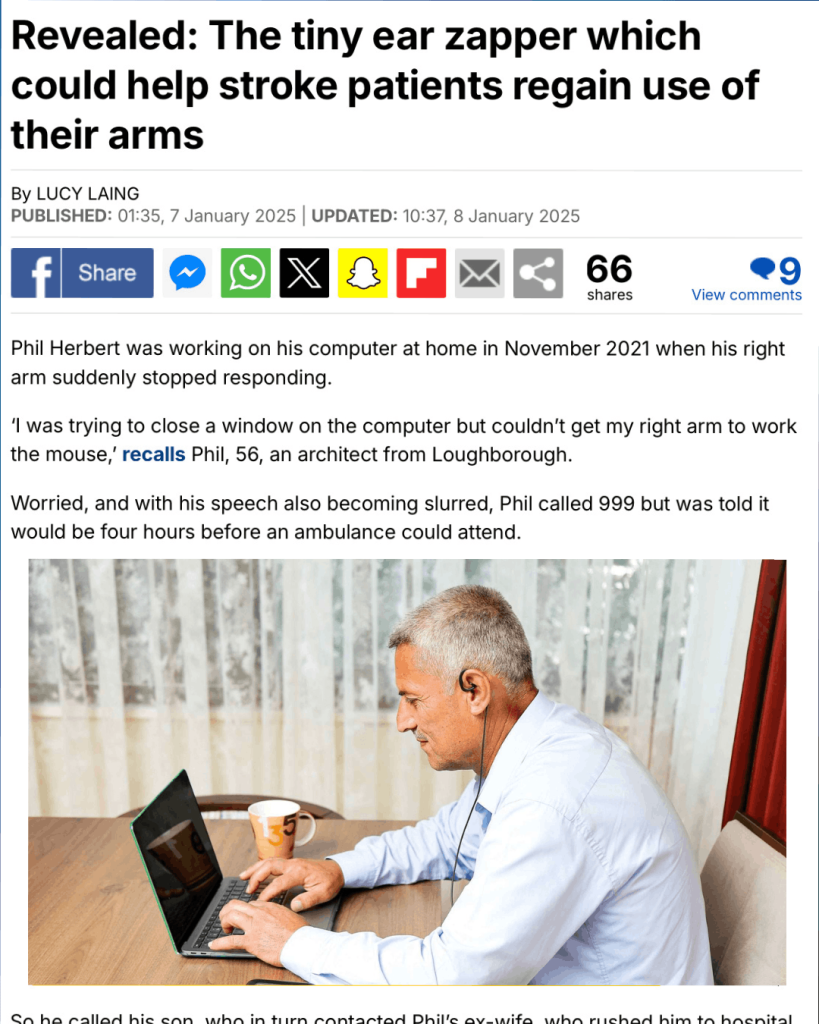
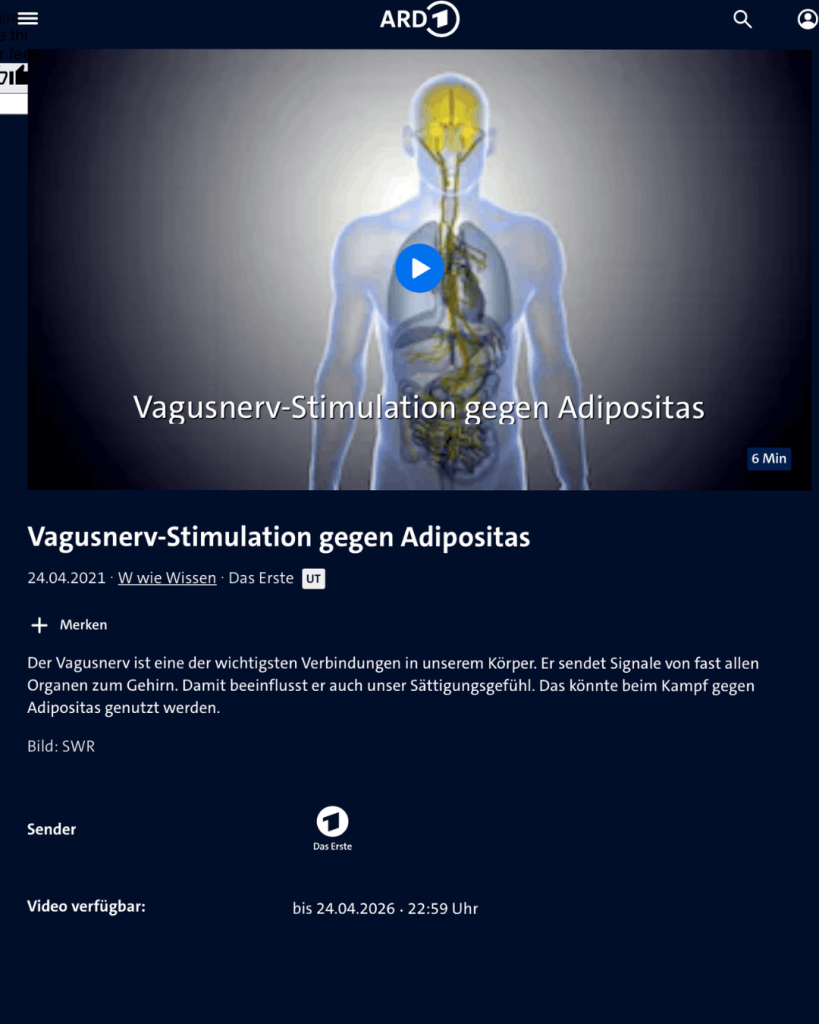
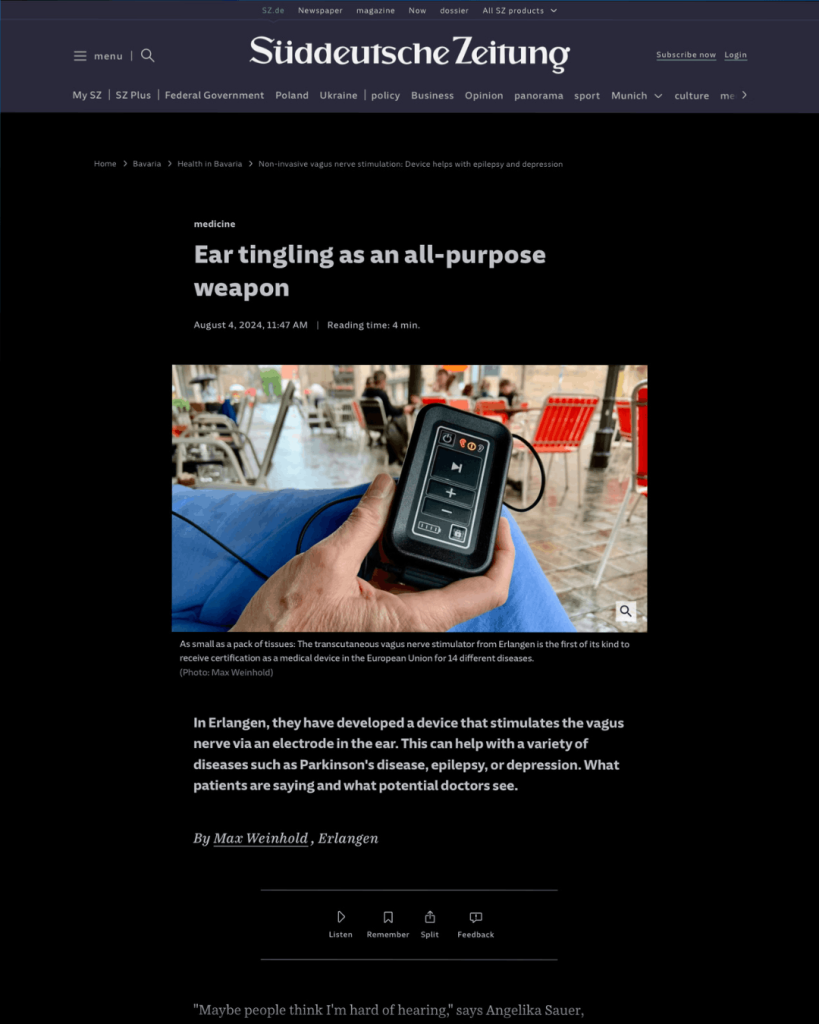
tVNS® has already been featured in numerous renowned national and international health, science, and innovation media outlets for its evidence-based approach to non-invasive vagus nerve stimulation. The coverage underscores the growing medical and scientific interest in transcutaneous vagus nerve stimulation and the importance of clinically sound technology certified under the European Medical Device Regulation (MDR) in modern neuromodulation.
Click the publications logo that you would like to see, or scroll below and click on the article you would like to read.
For people with Chronic Fatigue Syndrome (ME/CFS), there are currently only a few approved therapies. However, research is increasingly focusing on a non-invasive method: transcutaneous vagus nerve stimulation (tVNS®). In this video, I explain as a neurologist how this stimulation via the ear works and why it has a direct influence on inflammation and the […]
The gut produces the majority of our serotonin and is in constant communication with the brain. What role do diet and gut flora play in well-being and mental health?
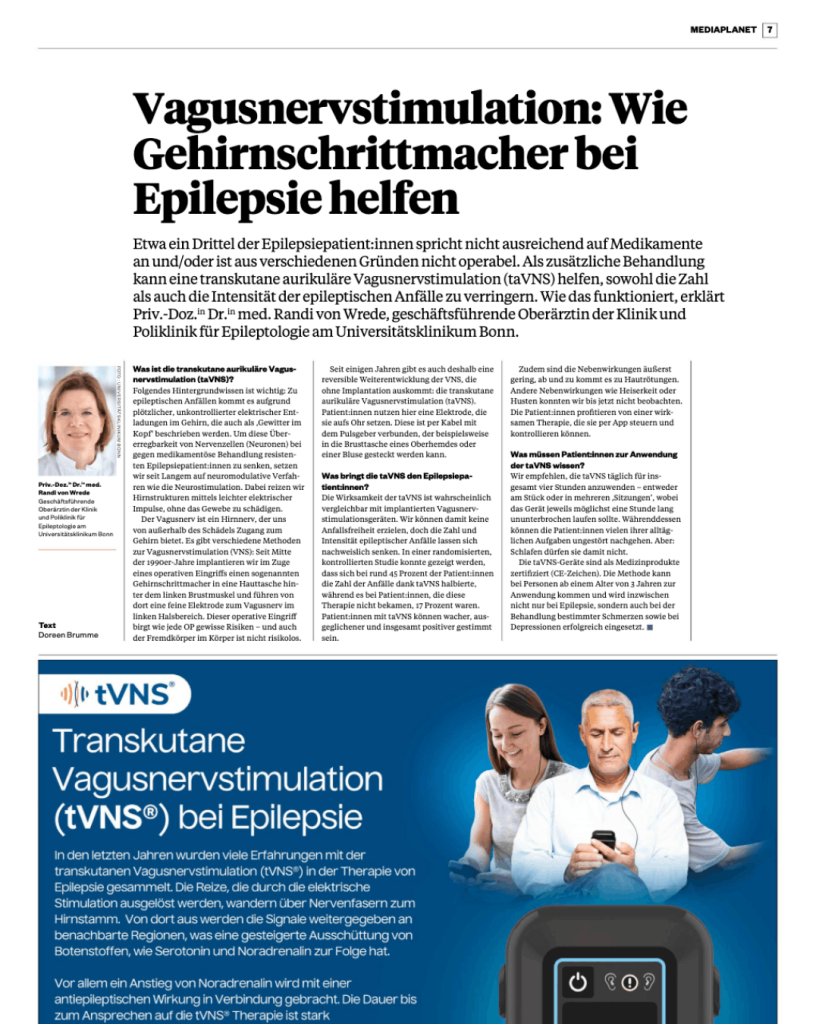
The vagus nerve is part of the autonomic nervous system. Vagus nerve stimulation is said to calm the body and even alleviate depression. Electrical devices, massages, and breathing exercises are used for this purpose. But does it really work?
Prof Dr habil Wieland Voigt, MD — CEO and Founder of VOC — introduces tVNS (transcutaneous vagus nerve stimulation), explaining how this non‑invasive therapy works to stimulate the vagus nerve.
For people with Myalgic Encephalomyelitis/Chronic Fatigue Syndrome (ME/CFS), there are currently only a few approved therapies. However, research is increasingly focusing on a non-invasive method: transcutaneous vagus nerve stimulation (tVNS).
The vagus nerve is often called the key to health in medicine. This important nerve, which connects the brain and body, influences breathing, heartbeat, and digestion. Many people can benefit from it: for stress management, improved athletic performance, or during long-term COVID-19 recovery. Will the vagus nerve revolutionize medicine?
Why is tVNS® increasingly being used in elite sports and longevity? Dr. Thomas Voit from the Longevity Center Nuremberg explains how targeted vagus nerve stimulation can support stress regulation, recovery, mental clarity, and long-term performance.
Transcutaneous vagus nerve stimulation is a non-invasive, well-tolerated procedure that has been used in medical research and practice for several years. Nevertheless, questions about safety and application understandably arise. The most important answers can be found here.
Yes. tVNS® is overall considered a very safe procedure, because:
Application follows clear safety standards.
No. During application, most patients feel:
The stimulation should not be painful. If it becomes uncomfortable, the intensity can be adjusted at any time, or the application can be stopped.
tVNS® deliberately works with an alternation of stimulation and pause (e.g., 28 seconds on, 32 seconds off).
This rhythm:
Pauses are an important part of therapy and allow the brain to process impulses.
Side effects are usually mild and temporary. Possible effects include:
During the first weeks of the adjustment phase, brief mild headaches or dizziness may also occur.
Serious side effects are very rare. In the case of persistent complaints, the application should be paused, medical advice sought, and we, as the manufacturer, informed.
tVNS is not suitable for everyone. It should not be used without prior consultation in cases of:
When in doubt, please always have it medically clarified.
Yes. tVNS is generally used as a complementary therapy and can be combined with medication, psychotherapy, or other forms of treatment.
Changes to existing therapies should, however, always be discussed with the treating physician.
tVNS® usually does not work immediately. Many patients report:
Patience and regular application are important.
With proper use, the risk is low. What is important:
In case of uncertainty, a repeat instruction session or consultation helps.
tVNS® is a medically researched procedure that, however, is not yet included in standard guidelines for many applications. It is therefore used primarily as a complementary therapy option.